
ASRS Systems in India: Unlock 3x Vertical Storage While Streamlining Operational Overhead
The focus of the Indian government on local manufacturing under the "Make in India" initiative, combined with post-GST supply chain consolidation, has triggered a structural shift in warehousing demand. According to Savills India data cited by The Economic Times (*1), over 13.5 million square feet of industrial and logistics space was leased in a single quarter across Tier I, Tier II, and Tier III cities. As manufacturing units scale up production and handle larger SKU volumes, business leaders frequently face a common operational constraint: facility storage capacity reaching its limit.
When facility space becomes constrained, the traditional response is often horizontal expansion—either acquiring adjacent land or opening a secondary warehouse facility elsewhere. However, as highlighted in supply chain reports on Business Standard (*2), commercial real estate prices across India’s primary industrial corridors have risen steadily. Expanding horizontally to a second site can significantly increase fixed operational overhead, add supply chain complexity, and commit substantial capital.
Forward-thinking Indian supply chain leaders are evaluating a more sustainable approach: utilizing the vertical air space available within their existing facility footprint before committing to additional real estate.
By shifting from horizontal space expansion to automated vertical storage, deploying an Automated Storage and Retrieval System (ASRS) enables manufacturing and distribution facilities to expand upward, unlocking up to 3x vertical storage capacity while streamlining operational overhead and fixed costs.
Understanding ASRS: Reclaiming Unused Vertical Footprints
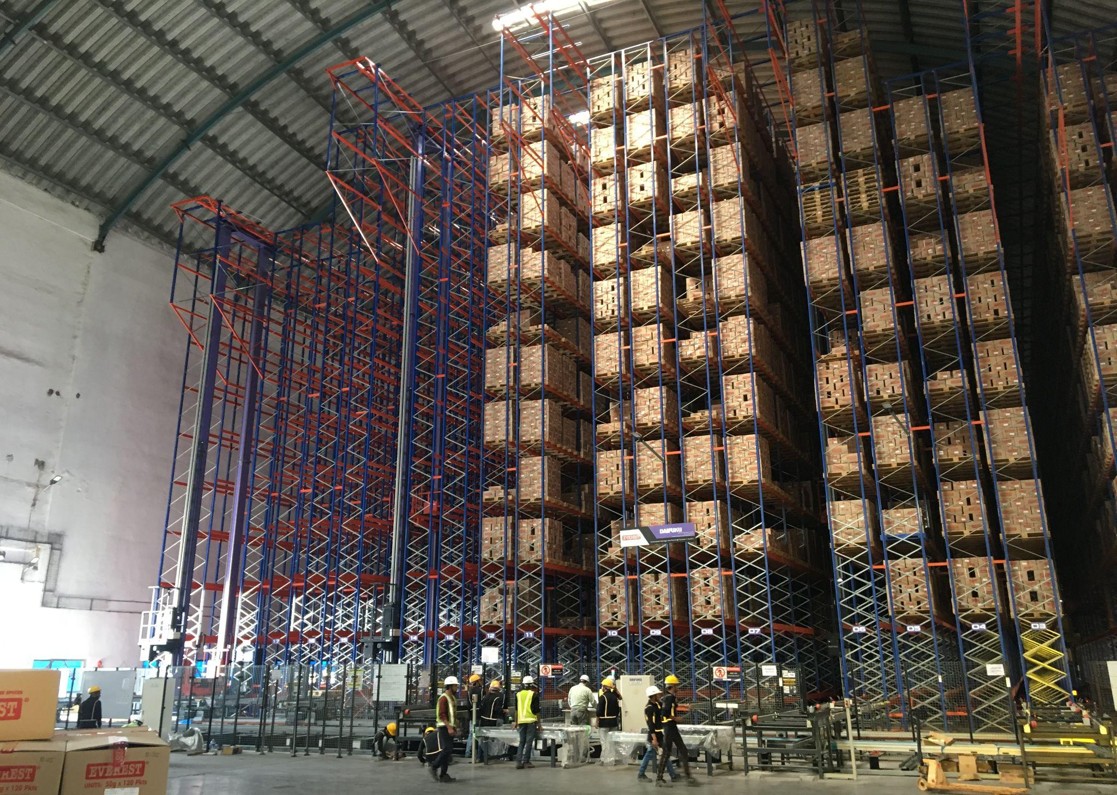
An Automated Storage and Retrieval System (ASRS) is a high-density, computer-controlled warehouse automation solution designed to store and retrieve inventory automatically with speed, safety, and consistency.
In a traditional manual warehouse, storage height is strictly constrained by standard forklift reach (typically 6 to 8 meters in India) and wide aisle space required for vehicle turning radiuses.
An ASRS warehouse optimizes spatial efficiency by utilizing vertical building heights up to 40 meters within narrow aisles. By replacing manual horizontal material handling with an ASRS racking system and stacker cranes, businesses can unlock up to 3x vertical storage capacity on their existing facility footprint.
5 Key Business Reasons Industry Leaders Are Implementing ASRS Systems
- Optimize Capital Expenditure on Industrial Land
- Acquiring additional industrial land in major Indian manufacturing hubs requires significant capital outlays—including real estate costs, registration fees, and site development expenses. An ASRS system allows facilities to expand upward into existing overhead space (up to 40 meters high) (*3). By increasing vertical density on your current plot, capital remains available for primary business operations, technology investments, and core capacity expansion.
- Streamline Operational Overhead and Fixed Costs
- Establishing a secondary warehouse facility to manage inventory growth often leads to escalating operational costs. Running two separate sites duplicates ongoing fixed expenses:
- Administrative Overhead: Managing redundant supervisory, administrative, and facility management teams.
- Utility Costs: Incurring separate utility, lighting, climate control, and building maintenance expenses.
- Safety & Security: Operating duplicate security teams, safety compliance protocols, and site insurance policies.
- Divided Inventory Buffers: Holding redundant safety stock across multiple locations, locking up working capital.
- Consolidating raw materials and finished goods within a single high-bay ASRS facility expands storage capacity up to 3x on one site while keeping operational overhead lean and unified.
- Enhance Throughput, Speed, and Inventory Precision
- Manual warehouse handling can introduce inventory tracking discrepancies and staging delays. Modern ASRS solutions connect automated stacker cranes with high-speed Sorting Transfer Vehicle (STV) rail loops operating at speeds up to 200 m/min. Controlled by Warehouse Management Systems (WMS), materials move seamlessly between high-bay racks and dispatch bays with high precision—reducing handling bottlenecks and improving order fulfillment speed.
- Manage Peak Demand Surges
- Festive season demand, quarterly dispatch pushes, and sudden volume increases can create congestion across warehouse floors. ASRS automation provides scalable handling capacity to absorb throughput spikes. Automated stacker cranes maintain steady, controlled storage and retrieval cycles regardless of operational shift timing, helping maintain consistent dispatch schedules during high-volume periods.
- Support Operational Efficiency, Uptime, and Facility Safety
- Continuous manufacturing and distribution operations benefit from built-in system reliability (*3). Automated handling infrastructure incorporates operational redundancy: if an individual stacker crane undergoes routine maintenance, adjacent cranes on parallel tracks continue to work unabated, maintaining ongoing dispatch operations. Furthermore, reducing heavy forklift movements inside high-density storage aisles supports a safer, more organized working environment.
Traditional Warehouse vs. ASRS Automated Warehouse
| Performance Metric | Traditional Manual Warehouse | ASRS Automated Warehouse | Business Impact |
|---|---|---|---|
| Clear Storage Height | 6 to 10 meters | Up to 40 meters | 3x to 4x vertical capacity |
| Facility Footprint Needed | High (Horizontal land expansion) | Low (Vertical density optimization) | Reduces need for extra land acquisition |
| Operating Overhead | Duplicated across multiple sites | Centralized within primary facility | Streamlines operational overhead & fixed costs |
| Aisle Width Required | 3.0 to 3.5 meters | 1.5 to 1.8 meters | Maximizes usable floor space |
| Inventory Accuracy | Variable (Manual paper/handheld tracking) | High-precision computer guidance | Minimizes mispicks & inventory discrepancies |
| Operational Uptime | Vulnerable to manual handling delays | Integrated redundancy & continuous design | Enhances operational uptime & resilience |
The Daifuku Advantage: India’s Leading ASRS Company*
89 Years of Legacy.
36,000+ Global Deployments.
Global leadership meets India's largest installed ASRS base - delivering 24/7 support.
When evaluating warehouse automation solutions, selecting an experienced technology partner is essential for long-term operational success. Daifuku Intralogistics India combines global engineering expertise with dedicated local infrastructure:
- Proven Indian Market Presence & Global Leadership: With over 300+ stacker cranes actively operating across Indian factory floors and more than 36,000 stacker cranes delivered globally, Daifuku offers proven material handling technology trusted across diverse manufacturing sectors.
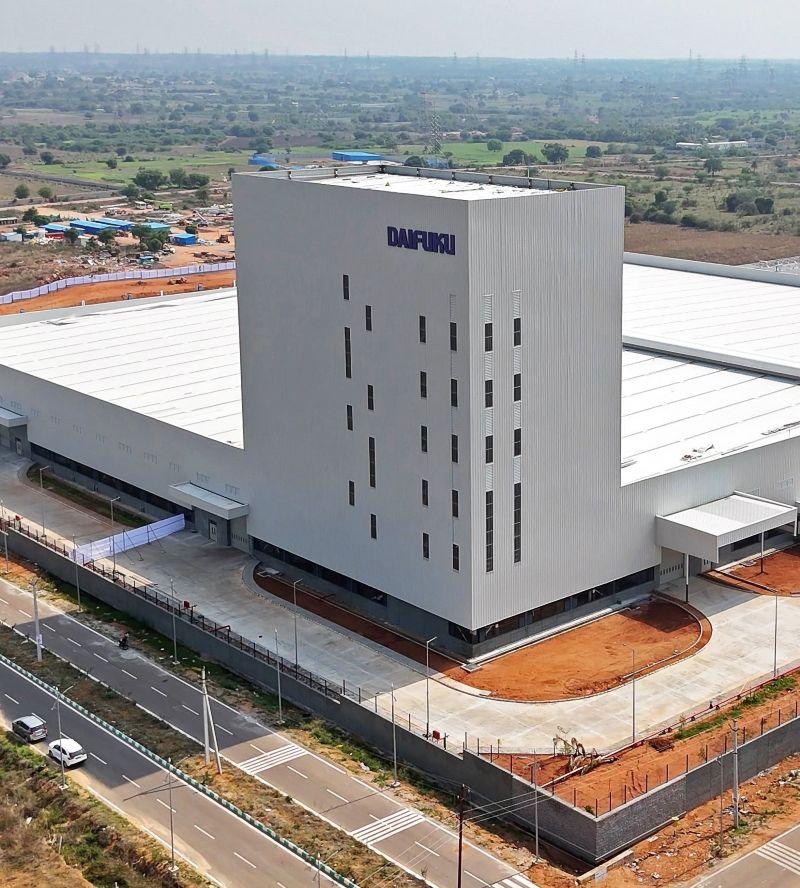
- Local Manufacturing Commitment: Operating a state-of-the-art local manufacturing facility in Hyderabad to produce ASRS structural components and equipment, supporting shorter lead times and local parts availability.
- 24/7 On-Ground Technical Support: Dedicated local Operations & Maintenance (O&M) engineering teams located across India provide 24/7 on-ground technical support, preventative maintenance, and lifecycle care to support operational continuity.
*Based on the results of an internal survey conducted by Daifuku Intralogistics India.
Conclusion
As Indian industries scale manufacturing capabilities, optimizing industrial real estate is a strategic financial focus. Expanding warehouse footprint horizontally through additional land acquisition or off-site facilities increases fixed overhead and operational complexity.
By partnering with Daifuku - India's leading ASRS company* - businesses can transform existing facilities into high-density, automated logistics hubs. Implementing an ASRS system enables up to 3x vertical storage expansion, improves handling efficiency, and streamlines ongoing operational costs.
*Based on the results of an internal survey conducted by Daifuku Intralogistics India.
Ready to unlock 3x vertical storage capacity without increasing your real estate footprint?
Connect with a Daifuku Intralogistics India specialist today to schedule a technical site evaluation and discover how automated high-density storage can optimize your warehouse ROI.
References:
- *1The Economic Times: Industrial-logistics space demand hit record this year at 76.5 mn sq ft in 24 major cities
- *2Business Standard / Logistics Analysis: Impact of GST Consolidation on Centralized Logistics Hubs in India
- *3MHL News (Material Handling & Logistics): High-Density Vertical Storage & Footprint Optimization Guidelines
Akash Dhankhad

Intralogistics Team Leader, Daifuku Intralogistics India
Akash Dhankhad joined the Daifuku Group in 2020 and is a team leader in Sales & Marketing for Daifuku Intralogistics India. Akash graduated with a degree in Mechanical Engineering and has been in the material handling industry since 2017.
About Daifuku Intralogistics India
Daifuku Intralogistics India is a subsidiary of Daifuku Co., Ltd., a global market leader in material handling and warehouse automation with an 89-year legacy of engineering precision. As a premier ASRS provider in India with over 300+ stacker crane installations and 400+ STVs operating across domestic manufacturing facilities, Daifuku combines global technology with localized manufacturing at its Hyderabad mega-plant—delivering high-density ASRS solutions backed by comprehensive 24/7 support.
