
Mobile Robots: AGVs and AMRs — What’s the Difference?
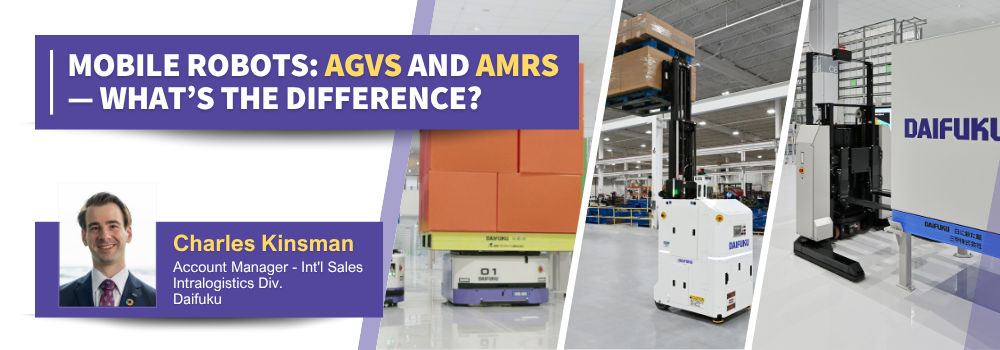
If you work anywhere near a warehouse or manufacturing facility that uses or is considering automation, you’ve probably heard the terms AGV and AMR. Sometimes used precisely, sometimes interchangeably, and sometimes incorrectly. Both systems essentially do point-to-point transport. So, what actually separates these mobile robot technologies? And, are those gaps closing?
Definitions Exist — but the Reality Is Grey Sometimes
Traditionally, the distinctions are typically explained something like this:
- AGVs (Automated/Automatic Guided Vehicles) follow fixed paths, often using physical guides such as wires, magnetic tape, QR codes, and even natural feature navigation and lasers at times.
- AMRs (Autonomous Mobile Robots) navigate dynamically, using sensors such as LiDAR, cameras, and onboard software to plan routes and avoid obstacles in real time.
However, today’s systems increasingly blur these lines. Many so called AGVs now incorporate higher-level navigation, more advanced obstacle detection, dynamic routing, and fleet management software. Meanwhile, some AMRs still rely on QR codes or other grid-based navigation for positioning and movement.
Take an AGV that normally follows Route A but switches to Route B—both pre-engineered—when its primary path is blocked. Is that autonomous movement? Some would argue no, while others might describe it as a form of “hybrid” autonomy. In many cases, there is no universally accepted answer.
Ultimately, these systems are all mobile robots. Navigation method alone does not define how advanced or effective a solution really is. QR based and magnetic tape systems, for example, are still used because they are reliable, scalable, and well suited to many industrial environments. They remain a valid choice when applied correctly.
What Really Matters Is the Right Solution
Many use AGV and AMR interchangeably when discussing mobile automation projects. That’s not because of carelessness, it’s because the focus is rarely on labels. What matters most are the outcomes:
- Is the navigation method suited to my environment?
- Is the handling device fit for my loads?
- Will it integrate well with my operations?
- Can it scale as my volumes change?
- Is it safe, reliable, and supported long-term?
Whether the system is technically classified as an AGV or an AMR is often secondary. The terminology matters for engineers and system designers, but for end users, it’s simply shorthand for “a robot that moves goods efficiently.”
The main goal is to find a practical fit. A well designed AGV system can outperform a poorly matched AMR deployment, and vice versa. The critical factor is having an automation partner that understands the full spectrum of mobile robotics and can recommend the right approach.
Mobile Robotics Solutions at a Glance
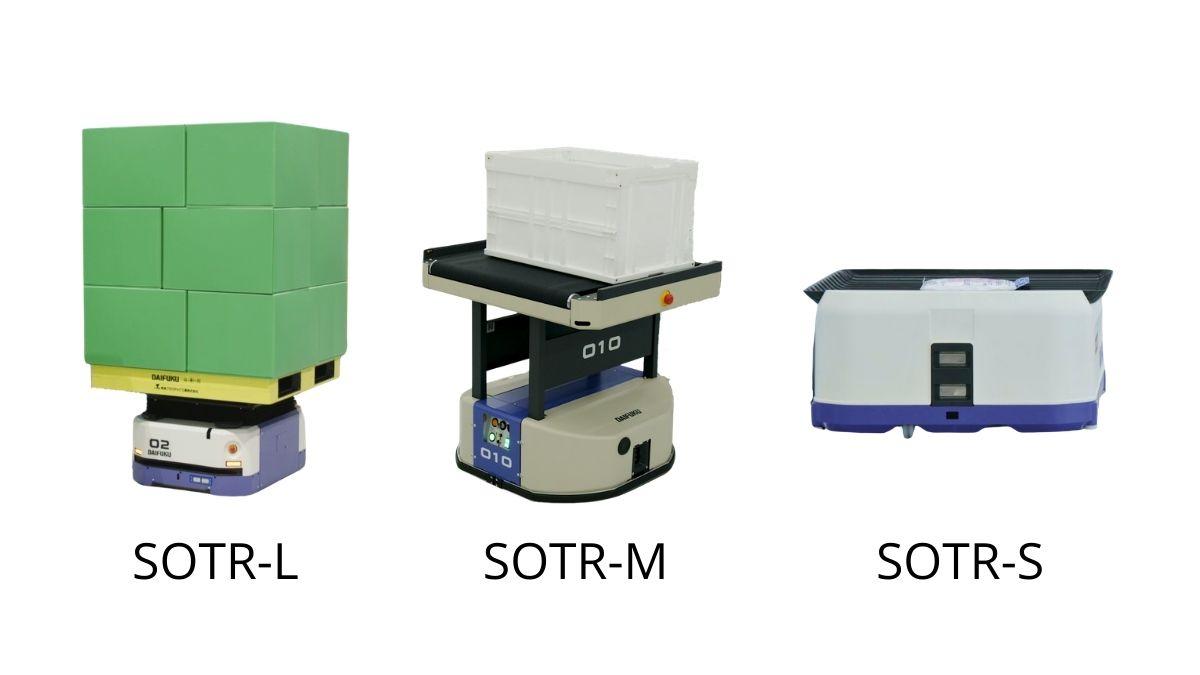
Daifuku’s offers a range of mobile robot solutions, including our Sorting Transfer Robot (SOTR) Series and a range of proven AGVs and AMRs.
- SOTR-S – Optimized for smaller payloads and flexible sorting applications.
- SOTR-M – A scalable solution for case and tote transport.
- SOTR-L – Engineered for heavier load sorting and transport.
- Smart Handling – A comprehensive range of forklift, tunnel, assembly, and towing AGVs for large-load handling from our Smart Handling business unit.
Charles Kinsman

Account Manager - Int'l Sales, Intralogistics Division, Daifuku
Originally from the United States, Charles relocated to Japan in 2019 after earning a degree in International Business and Japanese. Since joining Daifuku in 2023, he has played a key role in overseeing Intralogistics projects in Oceania and supporting projects in the US and Japan.
