Contributing to the Environment and Society with Our Products
Based on our long-term vision, Driving Innovative Impact 2030, the Daifuku Group will accelerate our initiatives focused on the future and contribute to solving environmental and social issues through our products.
Sustainability Performance Assessments of Products
In fiscal 2024, we began conducting sustainability performance assessments to evaluate the environmental and social value of our products and systems. From fiscal 2012 to fiscal 2022, we conducted environmental performance assessments of our products under the Daifuku Eco-Products Certification Program; however, going forward, we will evaluate our products from a broader perspective that includes consideration for the environment as well as contributions to customers and society.
We will continue to conduct environmental impact assessments for all our products using an LCA (Life Cycle Assessment) method. By fully grasping the environmental impact of our products throughout their entire life cycle, we will strive to further enhance environmentally conscious product design.
Main points of evaluation
Environmental value
LCA (Life Cycle Assessment)
CO2 emissions, resource consumption, toxicity, energy consumption, air pollution, water consumption
Ease of operation, accuracy, manpower saving, labor saving, wait time reduction, etc.
Maintainability
Rust resistance, friction resistance, durability, etc.
Other
Cleaning ability, drying ability, water drainage, stain resistance, gloss, soundproofing, etc.
Efforts for Energy and Resource Conservation in Products
Our Group’s products contribute extensively to factory automation in general industry, semiconductors, and automobiles, as well as to labor saving in logistics centers and more efficient airport operations. We consider the minimization of energy consumption during operations and of the resources used in our products to be an important initiative, and we are working on utilizing creative ideas and applying various technologies from the design stage.
Examples of initiatives for energy conservation
Utilization of regenerative power
In automatic warehouses and transport systems, utilize regenerative converters to harness the regenerative energy produced during deceleration and descent and feed it into the power supply of other machines, equipment, and devices
Regenerate the deceleration energy of the motors in Automated Guided Vehicles (AGVs) and recharge the batteries for effective use
Installation of energy-saving functions
Equip AGVs, conveyors, and sorters with a function that turns off the power during standby
Support the optimization of machine operation and the energy-saving activities of customers through the visualization of energy consumption using monitors
Equip transport systems with a function to equalize power demand
Reduce the amount of energy consumed during car washes by installing an ECO mode
Use of motors and inverters
Install power generation motors on sorting vehicles to improve the efficiency of power supply
Use high-efficiency motors in transport systems or install them as standard
Reduce energy consumption by using inverters in car washes
AI-based optimization
Optimize the routes and sequences of transport systems using AI technology (enables the same amount of transport to be carried out with fewer AGVs)
Weight reduction
Implement lightweight designs through strength analyses
Consolidate the ICs (integrated circuits) on circuit boards to make electronic products lighter and more compact
Other
Reduce energy consumption by adopting new generation CPUs in electronic products
Install thermostats in car washes to minimize the use of heaters in cold regions
Utilize simulations to reduce the number of test runs on actual equipment, resulting in reduced energy consumption
Examples of initiatives for resource conservation
Reduction of materials
Implement lightweight designs through strength analyses
Reduce the number of parts by consolidating ICs (integrated circuits) and using innovative sheet metal structures
Switch from product description CD-ROMs and paper media to web downloads
Extended service life
Research materials to improve the durability of traveling wheels
Utilize resin or corrosion-resistant materials to enhance rust resistance
Create designs that eliminate rotating bodies such as fans and hard disk drives
Avoid using condensers or use extended-life condensers
Virtual engineering
Reduce the number of parts by utilizing 3D models
Reduce the number of parts used in prototypes by utilizing virtual engineering such as capability simulations, virtual emulations, and welding analyses
Environmentally friendly materials
Utilize recycled and biomass resins
Utilize environmentally friendly liquid detergent in car washes
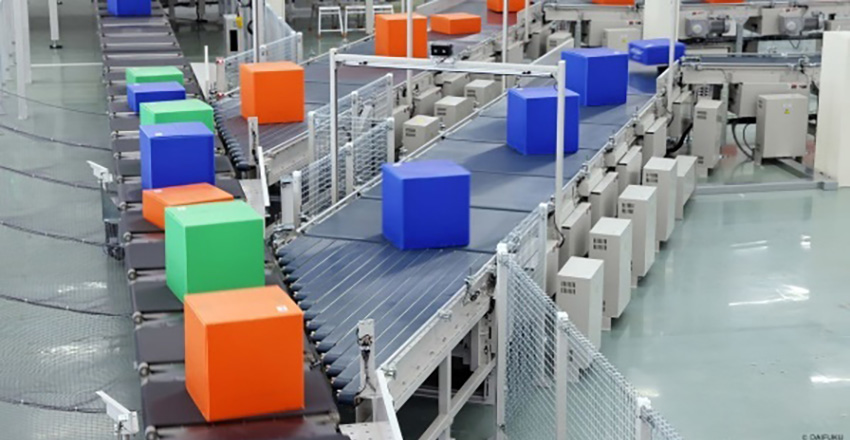
The Cross-Belt Sorter is a system that sorts items at high speed by rotating the belts on each of the connected carts as they travel along the rails. It is mainly used in e-commerce logistics, where a large volume of items of various sizes and shapes must be sorted in a short period of time, and it contributes to improving work efficiency and alleviating labor shortages. Since each cart operates independently, a malfunction in one does not require shutting down the entire system, allowing operations at logistics sites to continue with minimal disruption. By supplying power from a power generation motor mounted on the carts, we have reduced their weight, lowered energy consumption, and lowered costs.
Environmental value
Compared to the non-contact power supply HID* model, this model reduces energy consumption by 3.5% and CO2 emissions by 8.1%
Social value
Compared to the non-contact power supply HID* model, this model features lower costs
A quiet design contributes to an improved working environment
*HID is an abbreviation for High Efficiency Inductive Power Distribution Technology
Shuttle Rack (SRS-M Double-Deep)
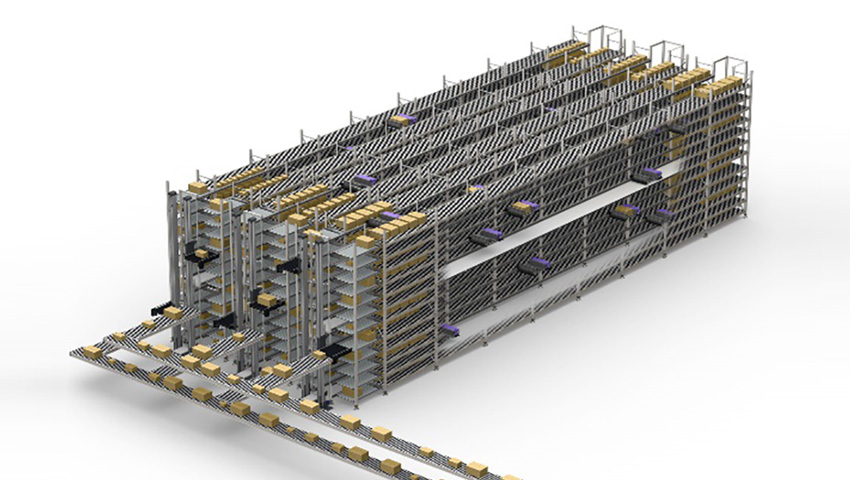
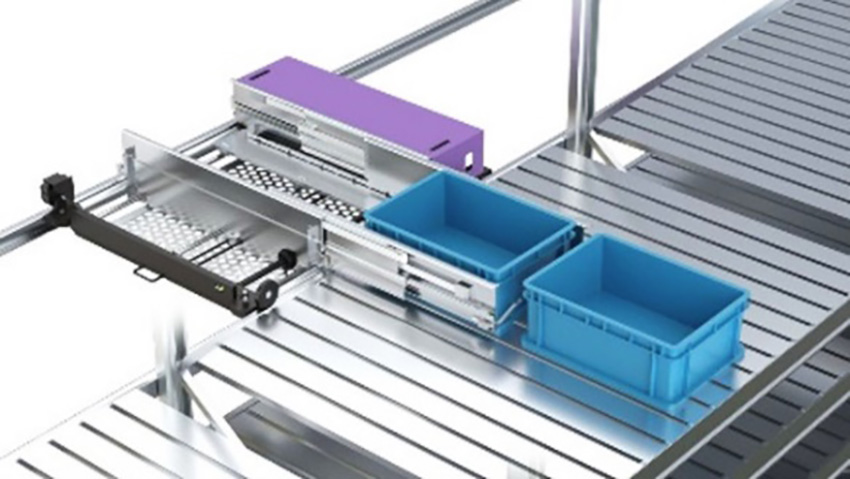
The Shuttle Rack M is a high-capacity automated warehouse system that uses carts on each level of the rack to provide both temporary storage and sorting functions. As it can store and sort large quantities of goods within limited spaces, it is mainly used in e-commerce logistics, which handles a wide variety of products in small lots. It is also used in retail, manufacturing, transportation, and agriculture, contributing to efficient sorting, storage, and picking operations. The carts are now capable of storing two items depth-wise on the shelf, allowing for more efficient and higher-density storage.
Environmental value
Both energy consumption and CO2 emissions have been reduced by over 50% in comparison to a similar product*
Social value
This model has three times the transport capacity compared to a similar product*
The space-saving design makes effective use of the space in logistics sites
*Mini Load AS/RS (R-F3)
SOTR-S (Energy-saving mode)
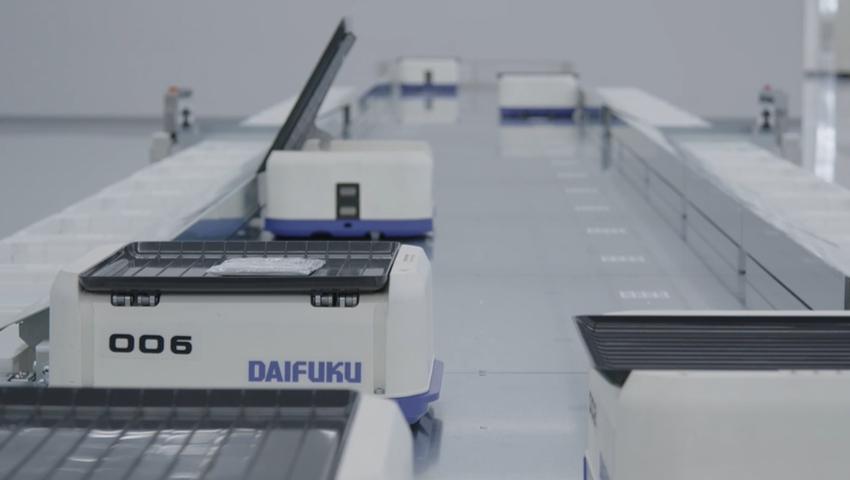
Sorting Transfer Robot S (SOTR-S) is an autonomous robot for sorting and transporting piece products, developed to overcome the challenges of high-speed processing of multiple products. Able to accurately, quickly, and gently sort a wide range of items, the SOTR-S is mainly used at sites such as distribution centers that handle extremely diverse product assortments, including those in the e-commerce and apparel industries. It enhances customers’ sorting capacity while also helping to resolve labor shortages. In addition to cutting power consumption during equipment standby, the adoption of high-efficiency components and the reuse of regenerative power enables a significant reduction in overall energy consumption. Sorting Transfer Robot S (SOTR-S)
Please enlarge the screen to view
Vehicles at work sorting and transporting individual items
Environmental value
Power consumption during standby and lifter operation reduced by 6% through power-cut control during equipment standby as well as weight reduction
The combination of high-efficiency components and regenerative power reuse reduced total system power consumption by 34%
Each vehicle can sort to both left and right, enabling space-saving system design
Vehicles, chutes, and loading stations can be added according to changes in throughput volume
Wireless power supply system HID power supply unit HID4-BA
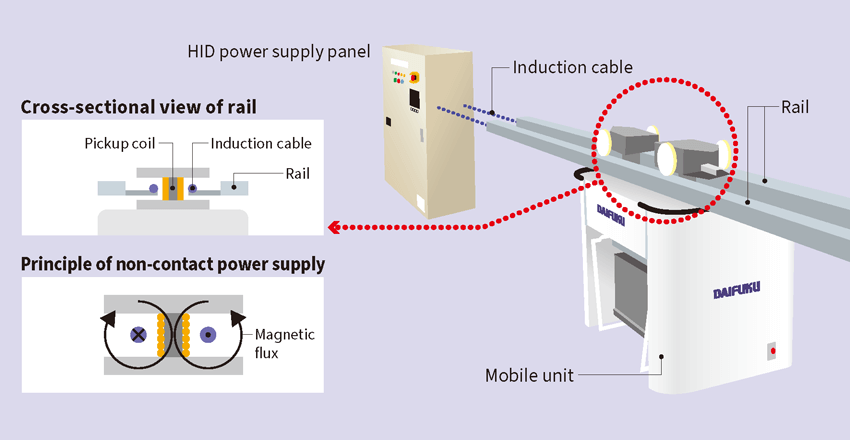
The wireless power supply system HID power supply unit HID4-BA is a power supply system that provides non-contact electric power. Unlike power supplied through cables, it does not generate dust from friction and is therefore used in many semiconductor manufacturing lines and liquid crystal manufacturing facilities where a high level of cleanliness is required. Automated transport enables the production of high-quality products at a low cost and in a shorter timeframe. Additionally, the non-contact design prevents wear and tear, allowing for stable, long-term power supply and a significant reduction of maintenance costs.
Please enlarge the screen to view
A high-frequency current is passed through induction cables on the rails, generating magnetic flux around them. This flux is captured by a pickup coil, creating induced electromotive force through electromagnetic induction.
Environmental value
Reduces the number of parts and the amount of resources used
Reduces power loss by changing the high-frequency transformer
Social value
Installation work is made easier by a 12% weight reduction
Reduction of parts improves maintainability
CLS-51 RM
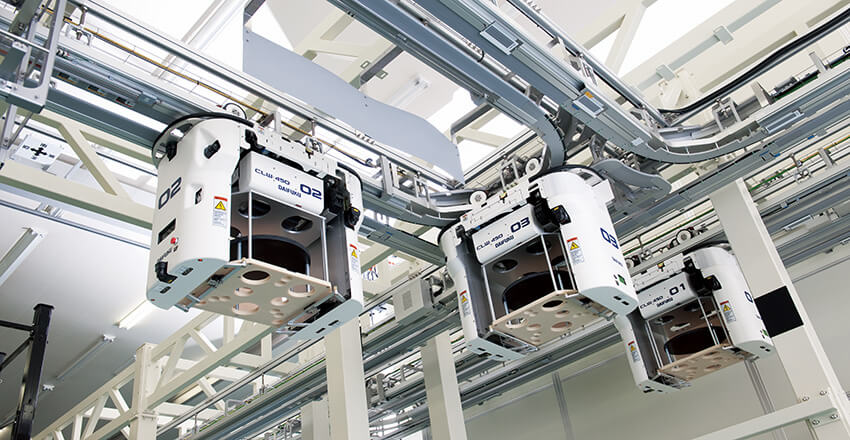
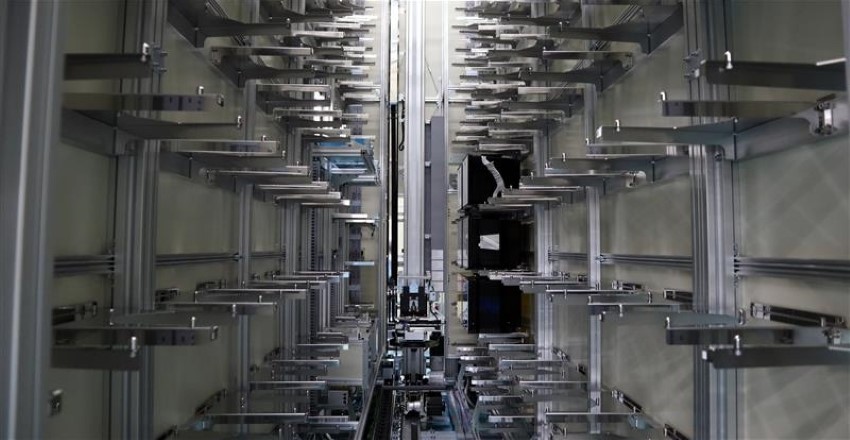
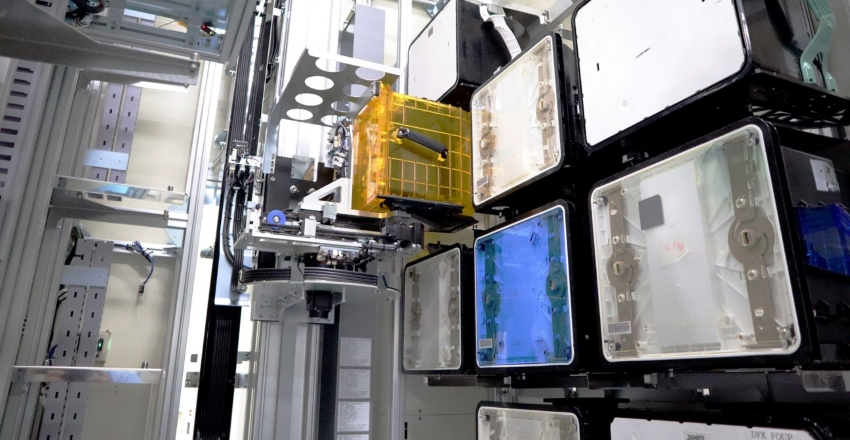
The CLS-51 RM, a type of Clean Stocker, is a device that is used to temporarily store carriers* during semiconductor production. Utilizing the storage and transport technology that Daifuku has cultivated over the years, this device allows for the accurate and efficient management of carriers in limited spaces. We made a variety of improvements to this product, including reducing the number of masts (columns) from two to one in the rack master section. Reducing the number of parts has resulted in a lighter-weight product and led to reduced energy consumption.
*Containers for transporting and storing multiple semiconductor wafers and other items.
Environmental value
Energy consumption and CO2 emissions per transport have been reduced by over 40% compared to similar products*
35% reduction in overall weight due to significant reduction of number of parts
Social value
30% improvement of transport capability compared to similar products*
Improved ease of assembly due to reduction of number of parts and weight
Improved serviceability by changing the drive unit to a simpler structure
*CLS-50II RM
Heavy-duty, low-floor SLAT conveyor
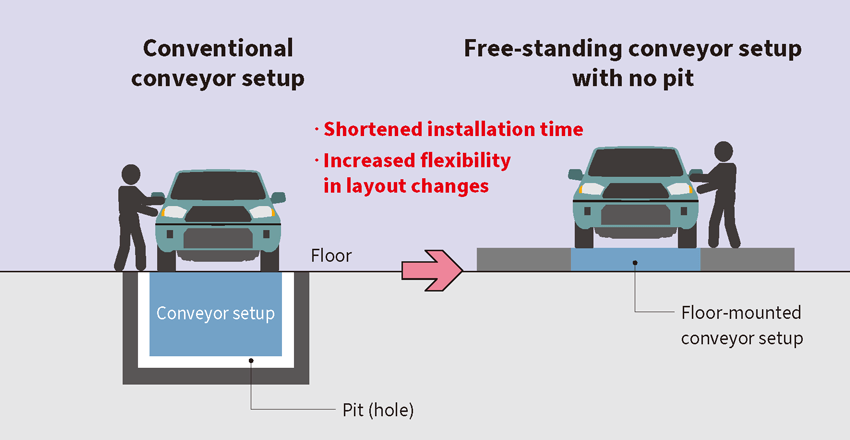
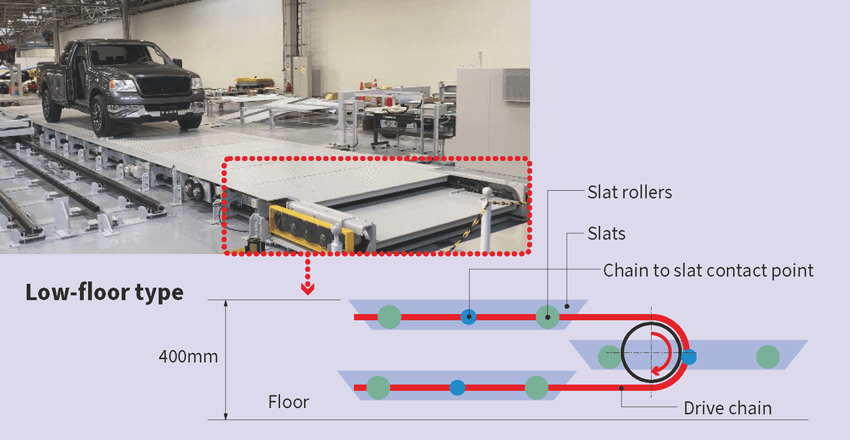
The heavy-duty, low-profile SLAT conveyor is designed for use in the assembly and inspection lines of automobile factories. Unlike conventional models that require a deep pit for installation due to their large drive units, this product features a compact, divided drive unit that allows for a low-floor design. This innovation eliminates the need for pit construction, thereby reducing waste and CO2 emissions during installation. Additionally, by increasing the maximum load capacity and adjusting the combination of rail units, this conveyor system can adapt flexibly to changes in production lines. It is used as a production line to improve efficiency in factories that have significant production variability, such as those that handle both gasoline-powered cars and heavy electric vehicles (EVs).
Please enlarge the screen to view
Please enlarge the screen to view
Environmental value
An enhanced life span has been achieved by improving the bearings and chains of conventional products
Reduction of product weight has resulted in an 8% energy consumption reduction
Social value
Efficiency of installation work has been improved by arranging standardized units
Reducing the total number of parts by 3% has made assembly work more efficient
There is no longer any need to enter a pit during maintenance, reducing the work burden and improving safety
TRVS
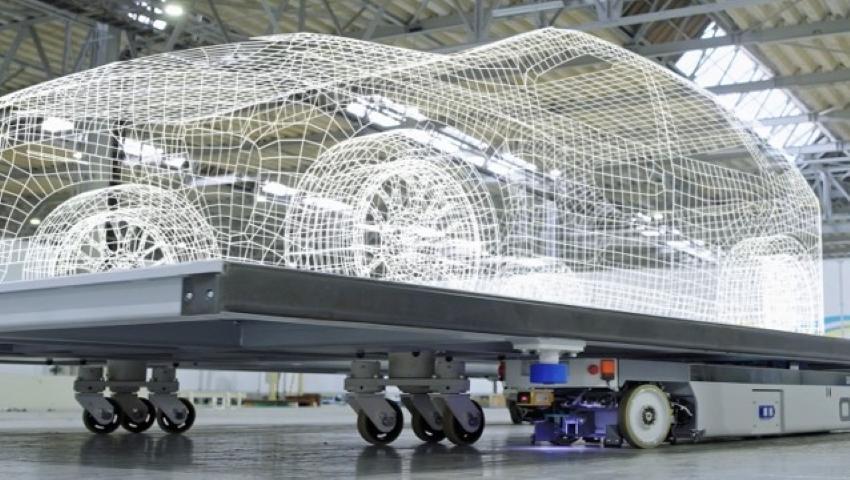
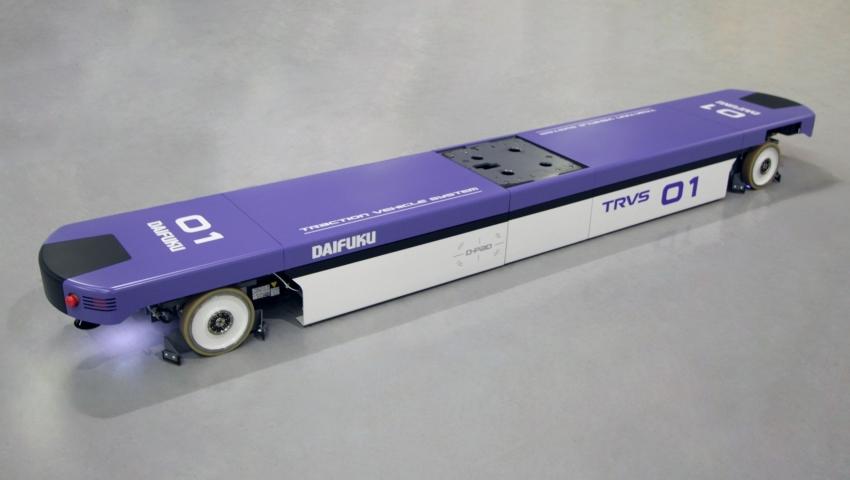
The TRVS is an automated guided vehicle (AGV) system to move car body carts around the factory floor that enables flexible line configuration on automotive production lines. Because the TRVS is omnidirectional, it accommodates the freedom to design optimal layouts, including branching, merging, and intersections. Its 6.5-ton load capacity also makes it possible to transport electric vehicles (EVs) and other heavy vehicles. In addition to enabling the easy implementation of rational line configurations through mixed-model production with standard passenger vehicles, it also allows for line configurations alongside conventional conveyor systems. The TRVS eliminates the need for rails used in conventional lines and facilitates production line reconfiguration through route changes, achieving overall system resource savings, reduced power consumption, and enhanced maintainability.
Please enlarge the screen to view
Please enlarge the screen to view
Environmental value
Eliminated the need for rails used in conventional lines, contributing to resource conservation
Significant reduction in total product weight leads to a 20% decrease in power consumption during operation
99.5% of parts are recyclable, improving the recyclability rate
Social value
Easy route modification of lines
Each unit can be removed individually, improving maintainability and minimizing factory downtime during troubleshooting
Unlike conventional lines, no pit (vertical shaft) construction is required
Baggage handling system
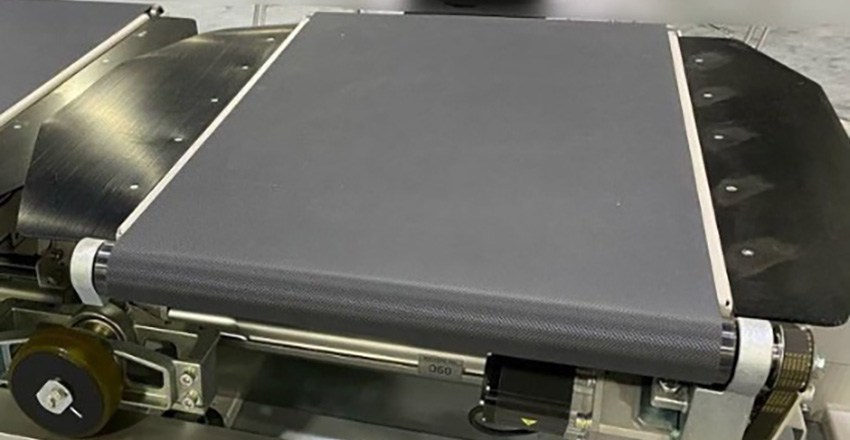
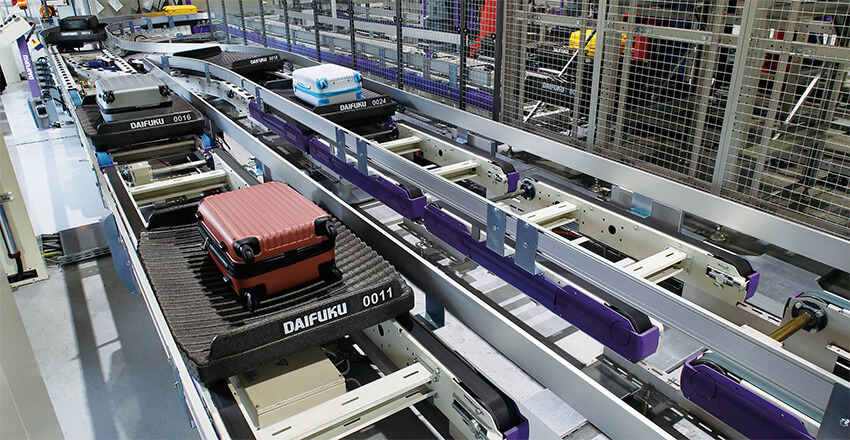
The baggage handling system efficiently transports and sorts passengers’ checked baggage at high speeds. It is designed for environments requiring rapid sorting of large volumes of baggage, such as in major airports. Unlike conventional belt conveyor systems, this system prevents damage to items by transporting each item individually on its own tray. By replacing the traditional wide belt with a combination of a narrow belts and rollers, we have successfully reduced the size of the motor. Additionally, by implementing an energy-efficient control system that activates the conveyor only when baggage trays pass through, we have significantly reduced energy consumption. The system reads the RFID chips attached to each tray, allowing for precise tracking of baggage in transit. This not only helps prevent lost baggage, but also reduces the labor and manpower needed to resolve baggage congestion.
Environmental value
Energy consumption is reduced by approximately 27% compared to conventional products that use belt conveyors
The overall weight was reduced by 40% by reducing the amount of belts and conveyor frames used
Social value
World-class transport speed of 600m/min
A decrease in the frequency of baggage congestion saves labor
13% quieter than conventional products, helping to improve the work environment
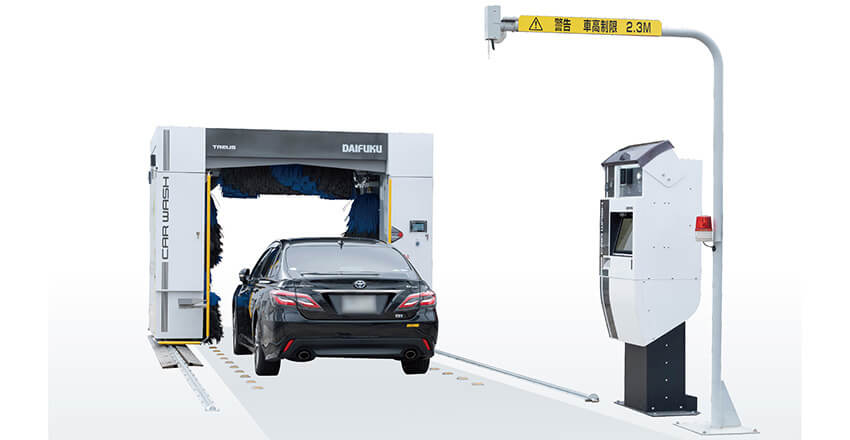
Drive-through car wash machine Treus (CMTE7000)
The Treus is a key model of drive-through car wash machine, primarily used at self-service gas stations. By combining brushing and rinsing in a single operation, it reduces the number of back-and-forth movements required for foam car washes from 2.5 to 1.5, leading to shortened car wash times as well as savings on both water and electricity. Additionally, it features the industry’s first Car Wash Smart Support function, enabling real-time communication with the service center and remote monitoring and operation of the machine in case of issues. This innovation eliminates the need to wait for service staff, allowing for quicker problem resolution and reduced downtime, ultimately improving operational efficiency.
Environmental value
Improved car wash operations and ECO mode settings reduce water usage by 10% and electricity usage by 20%
By changing the material of the coating agent and piping, the number of clogged pipes is decreased and the frequency of cleaning is reduced to one third
The Car Wash Smart Support function decreases the number of visits to customers, resulting in reduced CO2 emissions
Social value
Allows for rapid recovery and improved usability through remote operation
Treus Wide (CMTE8000) gate-type car wash machine
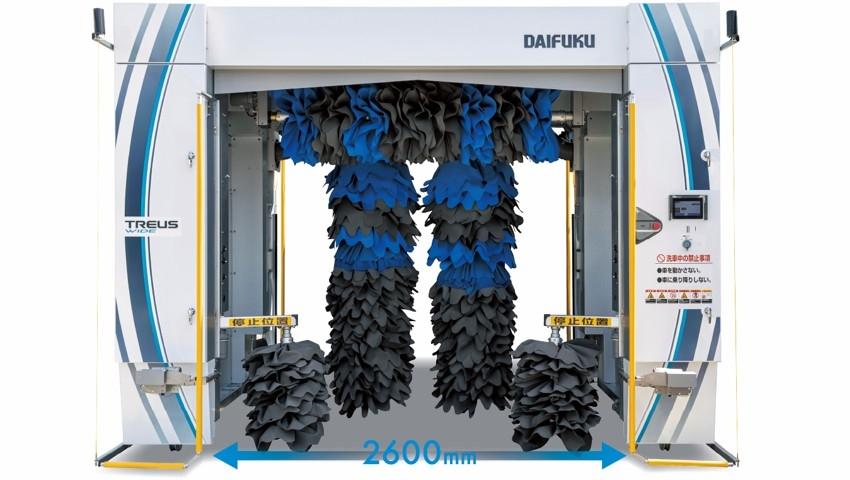
The Treus Wide is a car wash machine designed to make entry easier for owners of large cars and for drivers who are less confident behind the wheel. This is achieved by widening the entrance of the Treus (CMTE7000), Daifuku’s flagship drive-through car wash system, by 20 centimeters to 260 centimeters from the conventional specification. Additionally, it features a newly developed quiet brush that reduces cabin noise during cleaning. This allows even those who are not comfortable with the noise of car wash machines to use them with peace of mind, making it possible to expand the base of car wash machine users. Furthermore, we have reduced our environmental impact by optimizing car wash operations to use less cleaning agent. Additionally, the application of a coating agent that prevents UV exposure to protect the plastic components of cars.
Please enlarge the screen to view
Expanded entrance width allows easier access for large vehicles
Environmental value
Frame weight reduced by 11.3% compared to Treus, achieving a lighter design
Reduced cleaning agent usage by 10% through review of car washing operation
Reduced noise during cleaning by 10 dB though the development of quieter brushes
Social value
User convenience enhanced achieved through expanded car wash entrance and reduced noise levels
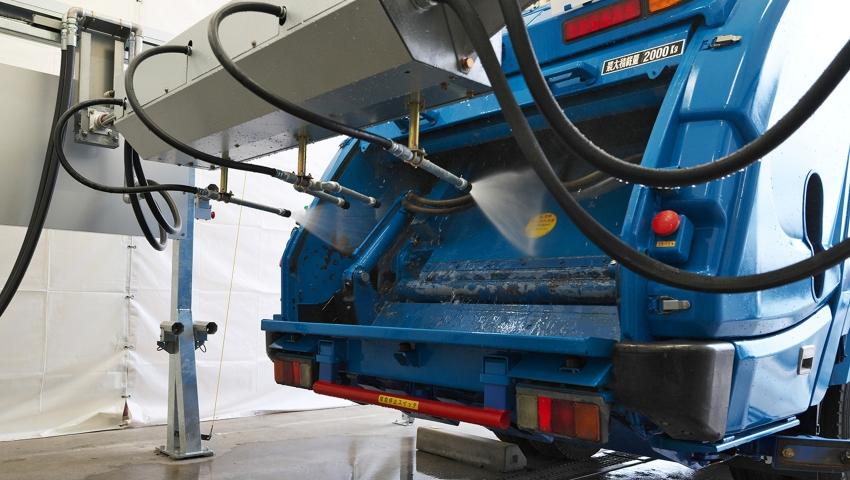
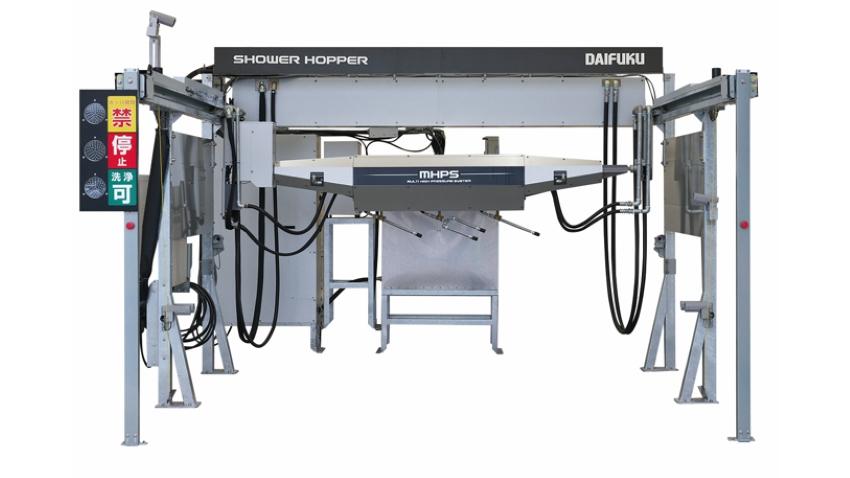
Shower Hopper (CMSH5000) internal washing system for waste collection vehicles
The Shower Hopper is Japan’s first automated internal washing system for waste collection vehicles. The system was developed utilizing the cleaning and automation technologies we have cultivated through car wash machines. By automating the conventional manual cleaning of areas such as the inlet port and the rear loading apparatus, we have improved cleaning capabilities while also reducing workloads, work time, and water consumption. This also leads to improved hygiene and safety for cleaning workers.
Please enlarge the screen to view
Please enlarge the screen to view
Environmental value
Water consumption reduced by about 20% compared to manual cleaning
Improved washing power (achieves uniform washing)
Social value
Car washing time reduced by about 30% compared to manual cleaning
Reduced workloads through automation
Improved work environment in terms of hygiene and safety
BX-T3000
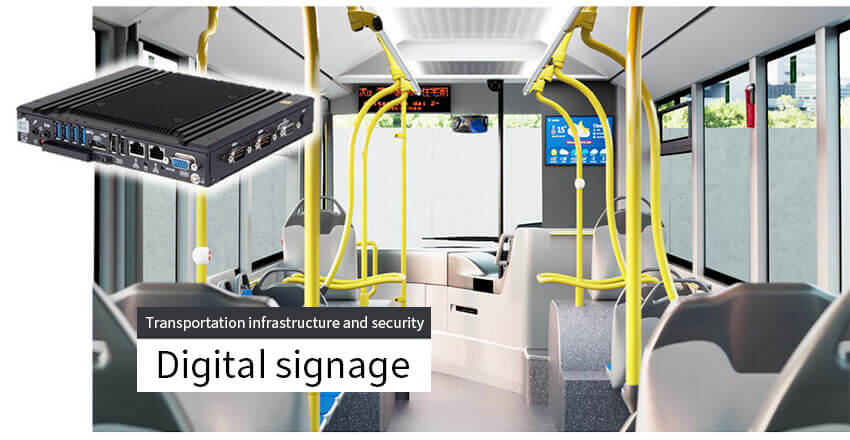
The BX-T3000 is an industrial box computer featuring a power-efficient, high-performance CPU. It delivers excellent calculation and rendering capabilities while maintaining energy efficiency. This unit is commonly used in factory inspection equipment, medical devices, and digital signage terminals on buses and trains. Its compact and lightweight design allows for installation in an area roughly the size of an A5 sheet of paper. With a broad operating temperature range, it can function reliably in harsh outdoor conditions, making it suitable for a variety of environments. Additionally, its design eliminates the need for a cooling fan and features a sealed structure without exhaust ports, which prevents dust and foreign objects from entering and minimizes maintenance and inspection workloads.
Environmental value
Due to its smaller size, the main unit weighs 35% less than previous products
78% reduction of internal packaging materials compared to previous products
The adoption of a new generation CPU has reduced power consumption by 26% compared to previous products
Social value
Despite its thin design, the unit combines a broad temperature range (-20°C to 60°C) with high performance, contributing to stable operation in a wide range of fields
BX-U310
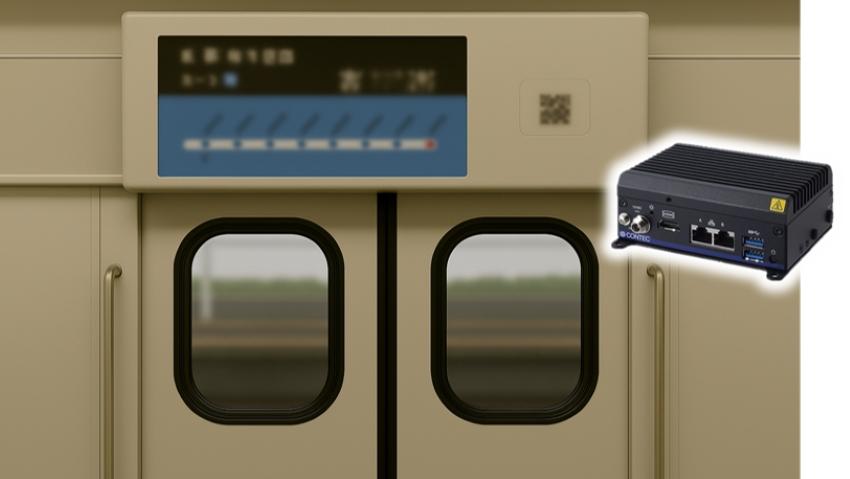
The BX-U310 is an ultra-compact box computer that combines a space-saving design with high reliability and strong security features. By limiting the number of onboard interfaces to the minimum required, a significant miniaturization and improvement in CPU processing performance have been achieved. Despite its ultra-compact design, the BX-U310 supports a wide temperature range and offers resistance to shock and vibration, enabling reliable operation across a variety of on-site environments. Additionally, elimination of the CPU fan removed rotating components from the design, preventing the ingress of dust or foreign matter associated with fan operation. The design also minimizes the use of components subject to deterioration over time, significantly reducing the burden on maintenance and inspection work.
Please enlarge the screen to view
Digital signage in trains as a use case
Environmental value
Limiting onboard interfaces reduced the overall product weight by 43% compared to predecessor models
Reduced circuit size reduced power consumption by 3% compared to predecessor models
Reduced internal packing materials by 43% by weight compared to predecessor models
Social value
Contributes to improved on-site productivity through reduced weight and enhanced processing performance
Despite its ultra-compact design, supports a wide temperature range (-10°C to 60°C) strong environmental durability (5G vibration, 100G shock resistance), enabling reliable operation across a variety of on-site environments
Fan-less and HDD-less design eliminates the need for replacement maintenance
Please refer to the following web page for details about products certified under the Daifuku Eco-Products Certification Program, which was in operation from fiscal 2012 through fiscal 2022.
The information you are about to access is not for release, publication or distribution in the United States of America. By proceeding to access the information, you agree and confirm that you are not in the United States of America.
※If your response is “No”, the file will not be displayed.