
DAIFUKU SolutionsImproving Work Environment with Japan’s First Garbage Truck Washing System (Mitaka Group)
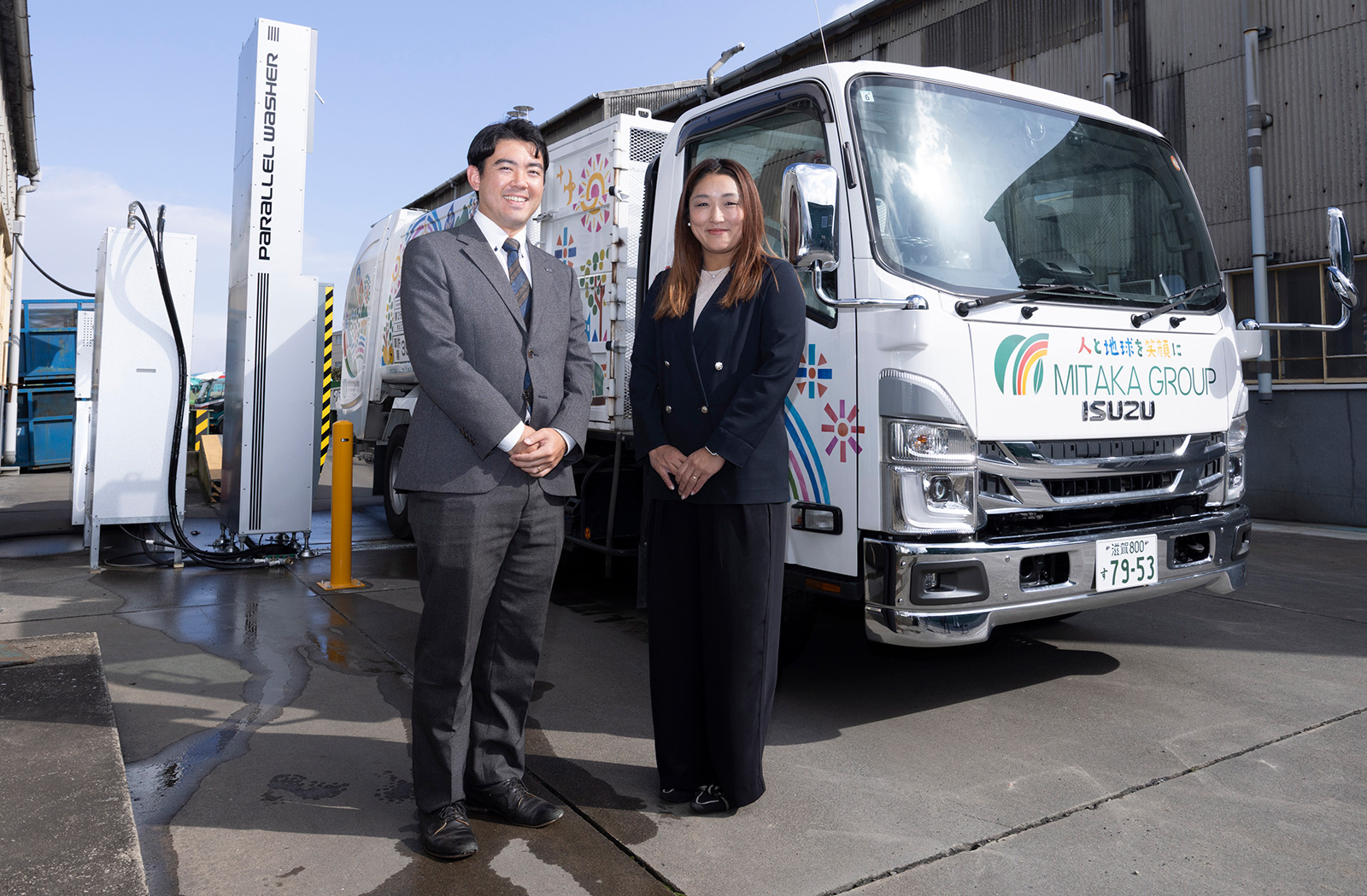
Mitaka Group Holdings Co., Ltd. (hereinafter “Mitaka Group”) operates a waste management business in Konan City, Shiga Prefecture. Until recently, Mitaka Group washed packer trucks and other commercial vehicles manually. By introducing Daifuku’s washing systems, the company eased employee workload and reduced washing time. Amid a growing labor shortage in Japan, Mitaka Group is focusing on creating the best possible work environment for its employees. We spoke with Yukiyo Mitaka, President of Mitaka Group (right), about industry trends and the company’s approach . Victor Setsuo of Daifuku Plusmore’s Frontier Business Sales Department (left), who helped lead the project, also explains the significance of automating washing operations.
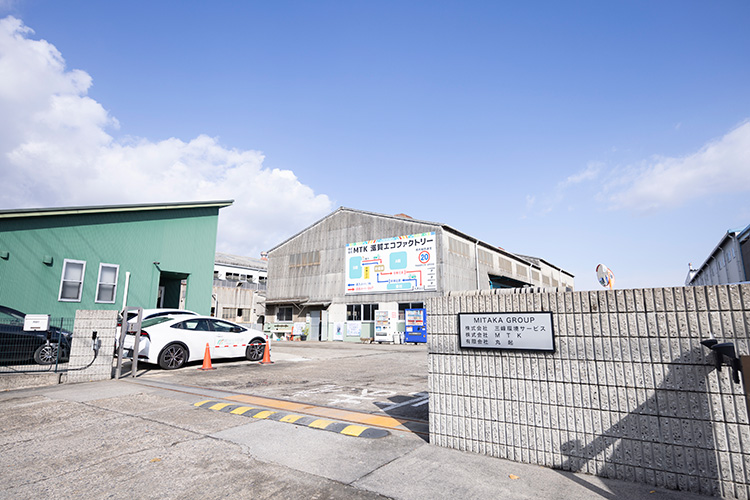
Mitaka Group headquarters
Could you tell us about Mitaka Group and the roles of its subsidiaries?
Mitaka: Mitaka Environment Service Co., Ltd. traces its origins to Kansai Environmental Maintenance Service , founded by my father in 1978. The company serves as the core of our group and is primarily responsible for collecting and transporting industrial and general waste. The company handles industrial waste such as plastics and rubble, as well as general waste—primarily combustible waste generated by businesses and residential complexes. Other group companies include MTK Co., Ltd., which is responsible for waste treatment and disposal, and Three Peaks Ltd., which focuses on plastic recycling. To better clarify each company’s role, strengthen the respective areas of expertise, and enhance the overall group branding, we transitioned to a holding company structure in 2023. Mitaka Group oversees the management functions across the entire group.
How did you first learn about Daifuku?
Mitaka: I learned about Daifuku at the New Environmental Exposition 2024 event in Tokyo, where I saw the Shower Hopper, an interior washing system for garbage trucks. I was surprised to learn that there was a company specializing in washing equipment designed specifically for packer trucks. Mitaka Group operates approximately 40 waste collection vehicles, including 15 packer trucks. Packer trucks are equipped with mechanisms that compress waste, so their interiors become heavily soiled. However, I had never seen a dedicated system for cleaning the interior, matching its label as “Japan’s first.” Until the introduction of the systems, cleaning vehicles manually was our only option. My mother, who succeeded my father in managing the business, had often said during her time that a dedicated washing system was needed.
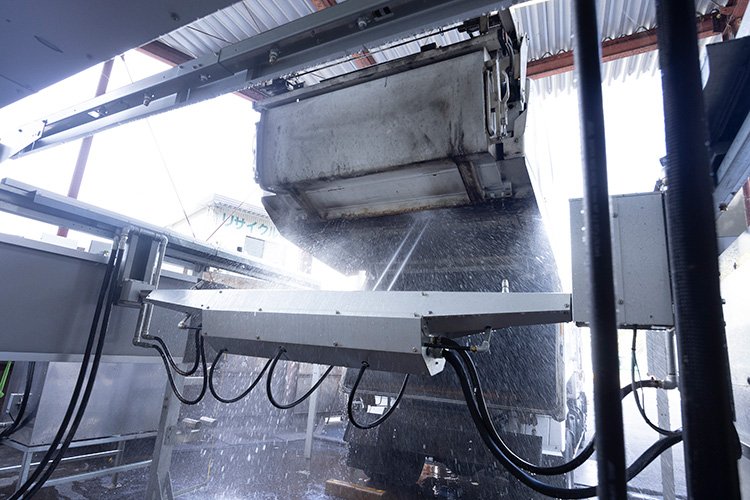
Automated cleaning of the inside of packer trucks with the Shower Hopper
How long does it take to wash the vehicles manually?
Mitaka: It takes about 40 minutes to wash a single packer truck. Previously, we washed the trucks using high-pressure washers. Because food waste, paper, and other materials adhere to the interior, dirty water often splashed back on the worker during cleaning, making the task unpleasant.
Drivers spend the day outdoors collecting waste, typically from around 6:30 a.m. until 4:00 p.m. Mondays and Fridays are particularly busy, and expecting drivers to wash vehicles after a full day of collection work placed a heavy burden on them. This was the driver behind us wanting to introduce the Shower Hopper.
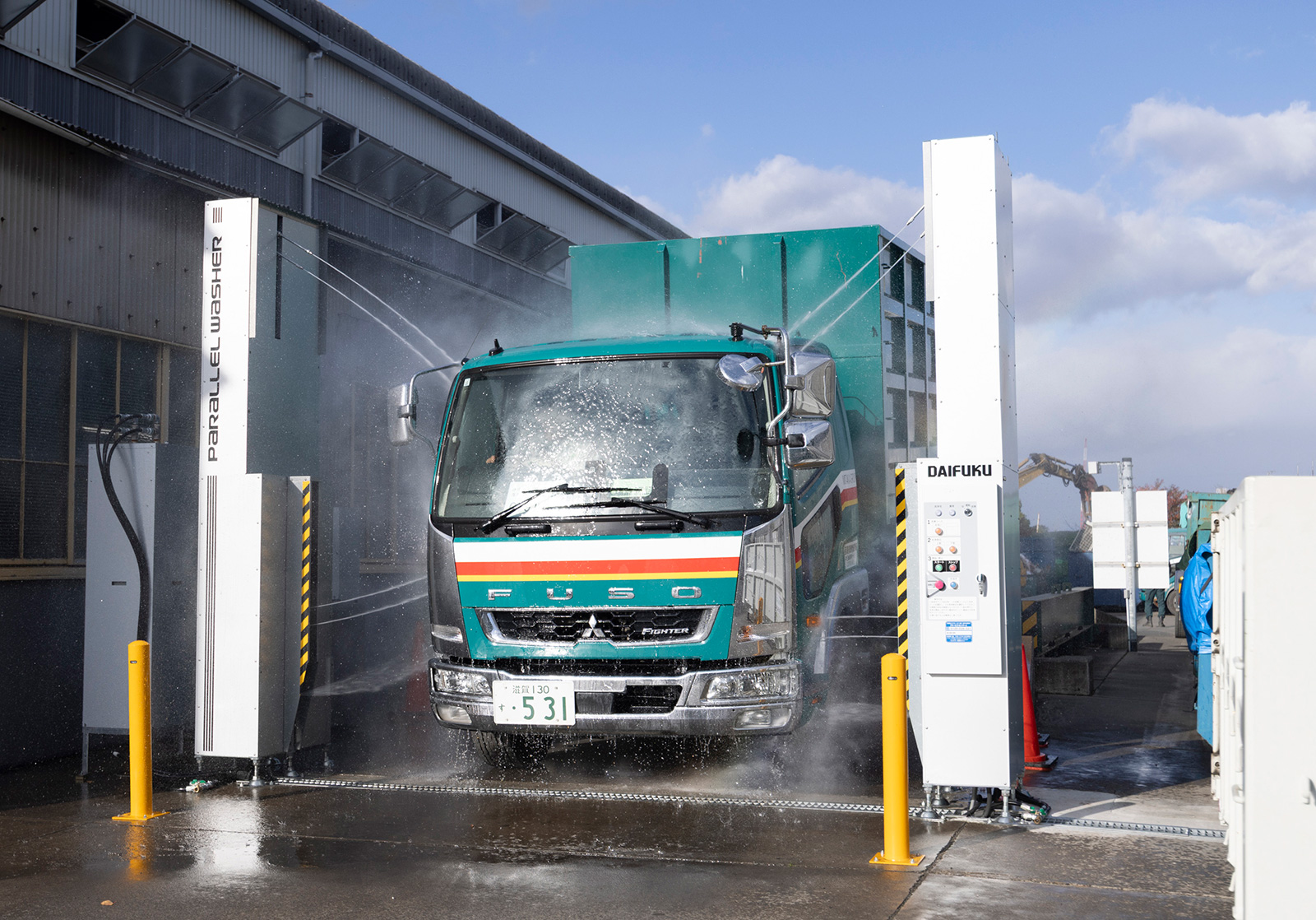
Victor: What stood out to me was President Mitaka’s comment that she appreciated Daifuku’s focus on the waste management industry. In the spring of 2025, representatives from Mitaka Group visited Daifuku’s Shiga Works to view the car wash machine in operation. I also observed the manual washing process firsthand and recognized how physically demanding it is. As a result, in addition to the Shower Hopper, I proposed our Parallel Washer, an exterior washing system for garbage trucks.
How has introducing these systems changed things?
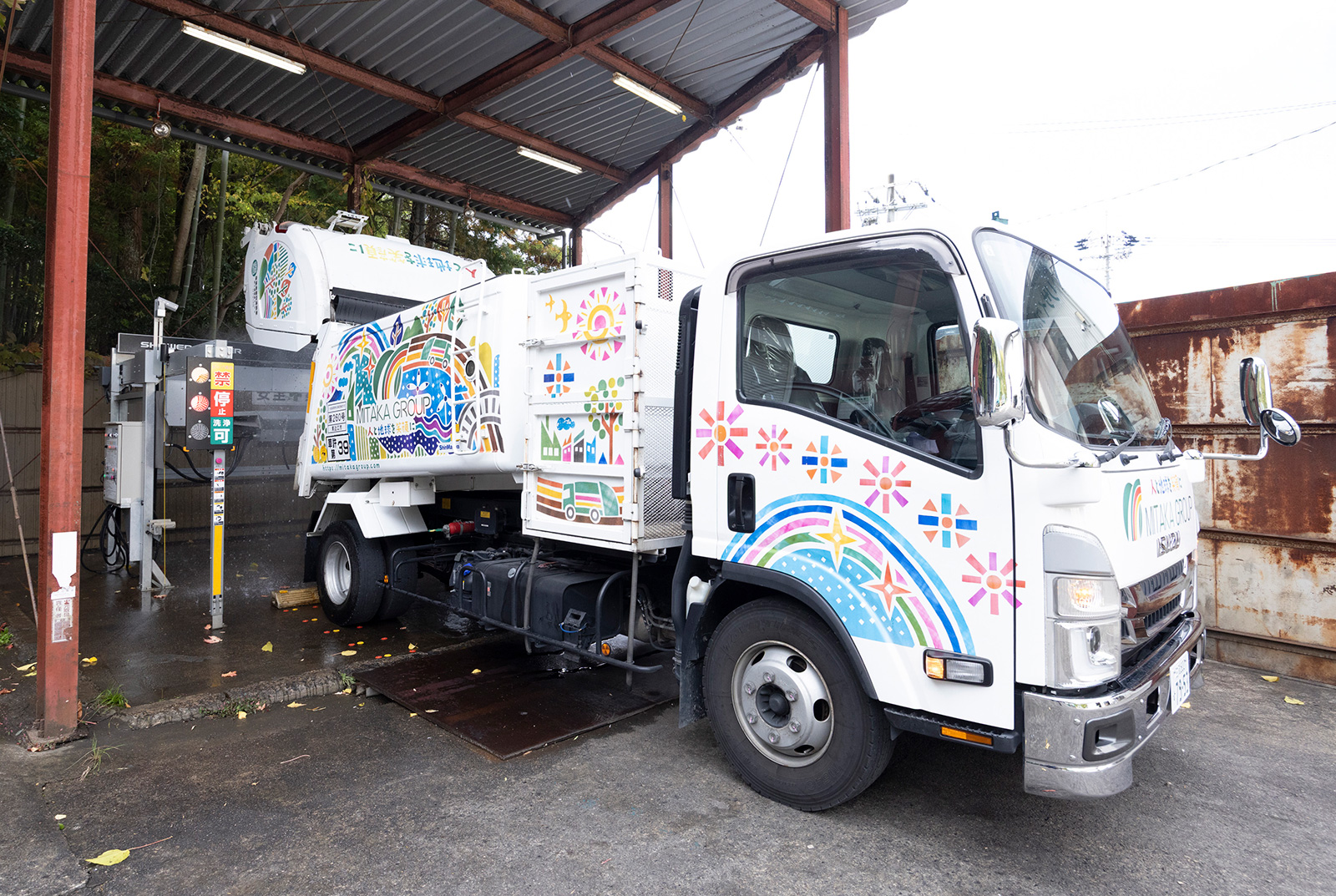
Mitaka: The time required for washing has been significantly reduced. The Shower Hopper takes approximately 10 minutes per vehicle, while the Parallel Washer requires only about one minute, as the vehicle simply passes through while being sprayed with high-pressure water. Compared with manual washing, this has reduced washing time by around 30 minutes per vehicle. In addition, the elimination of splashback during interior cleaning has eased both physical and mental strain on workers.
Another notable change is that drivers have started using the Parallel Washer before heading out on their routes. Vehicle washing, which had previously only been done out of necessity, has now become a natural part of daily operations, driven by a desire to go to customers with clean vehicles. Looking ahead, Mitaka Group also plans to make the Parallel Washer available to business partners that bring waste to its facilities. We expect this to be well-received as an added-value service alongside waste management.
Has introducing these systems had any impact on relations with local communities?
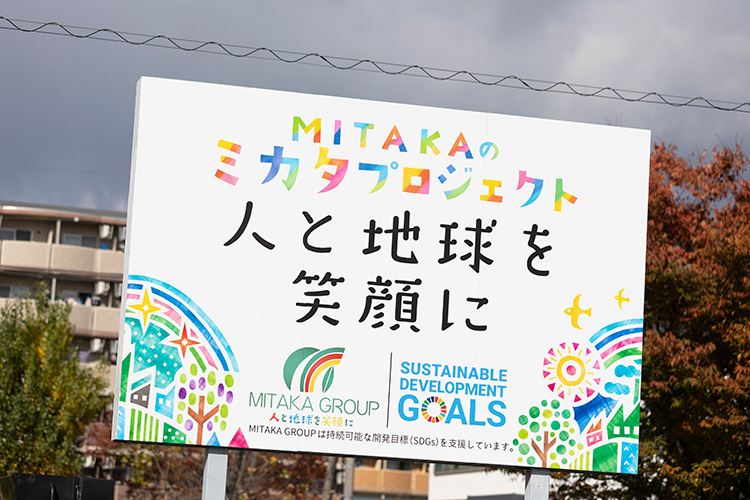
Mitaka: When dirty vehicles pass through neighborhoods or emit strong odors, it can negatively affect how the company is perceived by the local community. We have valued our relationship with the community since my father’s time, and the introduction of these washing systems has enabled us to operate with cleaner vehicles. Dirt can also lead to corrosion, so we expect that regular washing will help reduce maintenance costs and extend vehicle service life.
New Management Strategies for the Waste Management Industry Amid Labor Shortages
Would you say that labor availability was a key factor behind the decision to introduce these washing systems?
Mitaka: Waste management is an essential service and a relatively stable industry, one that wasn’t significantly affected even by COVID-19, but securing personnel remains a challenge. Because operating Mitaka Group packer trucks requires a mid-sized motor vehicle license, younger employees cannot begin driving them immediately. Even today, some drivers close to 60 years of age are still responsible for truck operation.
The average age of our workforce is around 43 to 44. To prepare for the future and attract younger generations, we are working to improve our work environment. In the general waste collection division, we introduced a system that allows employees to finish work at 4:00 p.m. Even though the workday starts slightly earlier, finishing at 4:00 p.m. has been well received—particularly by employees with children— and has significantly improved retention. We are also advancing initiatives to improve break rooms, offer meal subsidies, and achieve a 90% paid leave utilization rate. Working with labor and social security attorneys, Mitaka Group has also begun developing flexible systems that allow employees to choose work styles that align with different life stages.
What is your view on automation and mechanization?
Mitaka: While there are many tasks that must be performed manually, we believe automation should be actively pursued wherever possible. For example, since my father’s time, Mitaka Group has reduced manual loading by equipping its packer trucks with devices that automatically tip garbage bins. In 2025, we jointly developed garbage bins that will further expand automated loading with a commercial waste container manufacturer in South Korea. As adoption expands, loading operations are expected to become more accessible for a wider range of workers, including women and older employees. Our introduction of the Shower Hopper and Parallel Washer reflects that same approach. In today’s environment, physically strenuous tasks that do not require human judgment should increasingly be addressed through automation and digital transformation.
Victor: We received comments from employees on site about the Shower Hopper and Parallel Washer such as “They look impressive” and “They have improved the workplace environment.” If our products contribute even modestly to employees’ sense of pride in their workplace and work, we consider that a meaningful outcome.
The Role of Waste Management Companies in Advancing a Circular Economy
Aside from labor availability, what challenges do you see?
Mitaka: Many products cannot be recycled due to how they are designed or discarded, resulting in large volumes of waste being generated daily. For example, large quantities of paper are sometimes discarded due to minor printing errors, which represents a significant waste of resources. That said, there are signs of change. Even when landfilling is less expensive, some customers now request recycling, and manufacturers are increasingly seeking advice on how to make products easier to recycle.
Nevertheless, the majority of products are still disposed of through landfilling. Products made from multiple materials—such as shoes, nail polish, and electronic toys—remain difficult to recycle. Because we handle waste on a daily basis, we have unique insights into these challenges. We hope to play a role in raising awareness across society about how waste-related issues should be addressed.
What is your outlook for the future?
Mitaka: Recently, there has been discussion in the United States about AI replacing many occupations, while demand for blue-collar work is expected to increase. No matter how times change, as long as people continue going about their daily lives, waste will continue to be generated. For this reason, industries involved in waste management will remain essential. There are also many opportunities to advance recycling and a circular economy, and the waste management industry is expected to continue offering significant business opportunities.
Looking ahead, we are also considering the deployment of Japan’s environmental technologies overseas. As part of these efforts, we have conducted waste collection and plastic recycling workshops at an orphanage in Cebu in the Philippines and are also engaged in environmental education initiatives in collaboration with the University of Shiga Prefecture.
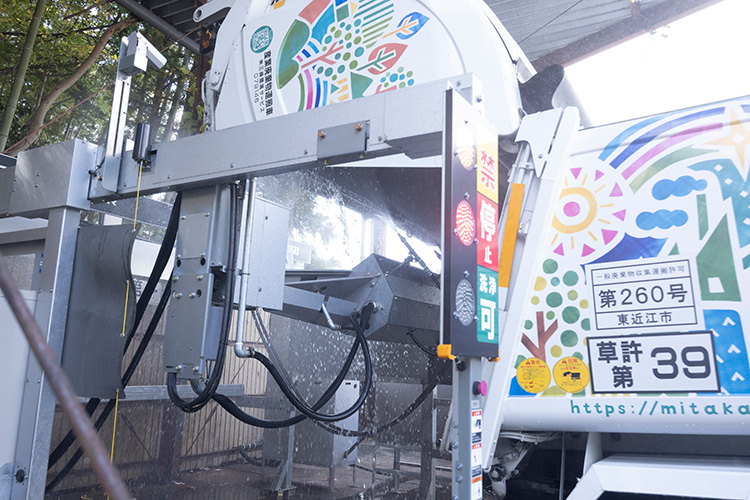
Victor: Through the proposal of garbage truck washing systems, we also aim to contribute to the development of the industry and environmental protection. The Shower Hopper and Parallel Washer use less water than manual washing, making them beneficial for both workers and the environment.
Mitaka: As long as the economy keeps moving, companies like ours will continue to play an essential role. At the same time, our ultimate goal is to create a society where waste is reduced, recycling advances, and environmental sustainability is improved. As a waste management company, we hope to contribute to building such a society.
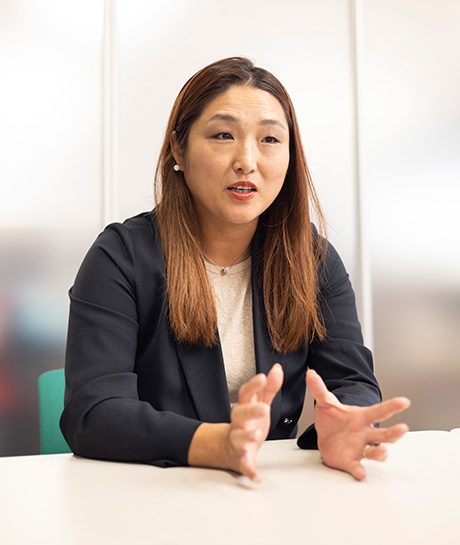
Yukiyo Mitaka
President
Mitaka Group Holdings Co., Ltd.
After completing graduate studies in interpretation at Newcastle University in the United Kingdom, Yukiyo Mitaka worked as a senior consultant at a global financial software company. She later returned to her hometown of Shiga to pursue work related to food and agriculture, and in 2011, co-founded a company handling agricultural products with a friend. After transferring ownership of that company to her business partner, she joined the family-owned Mitaka Group. She assumed her current position in 2023.